Real Estate & Property Law
Realty Transfer Tax Exemptions: The Complete List for Pennsylvania
Last updated February 2026
6 min read
✓ Verified Feb. 2026
Pennsylvania imposes a 1% state realty transfer tax on every transfer of real estate, and most municipalities impose an additional 1% local tax (2% total is typical in Bucks County). But not every transfer is taxable. The Tax Reform Code (72 P.S. § 8102-C.3) contains a long list of exemptions that can save thousands of dollars; if you know they exist and structure the transaction correctly.
For the basic calculation, see our Realty Transfer Tax page and Transfer Tax Calculator . This page covers the exemptions.
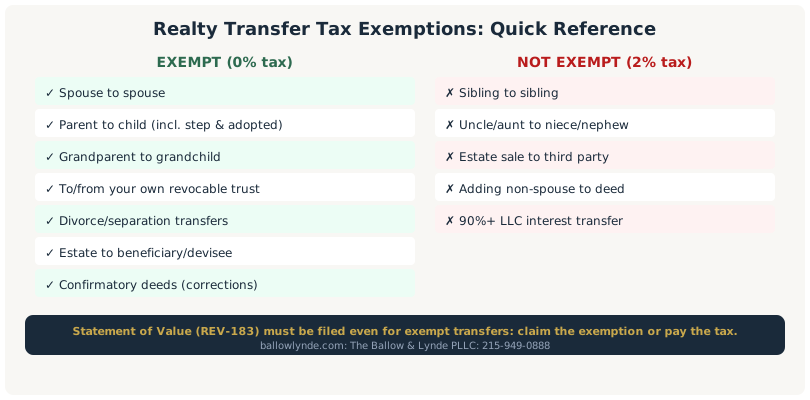
Transfers between the following family members are exempt :
The sibling exemption was added by Act 85 of 2012 (P.L.751, No.85), effective July 2, 2012, amending 72 P.S. § 8102-C.3(6). Note that if the sibling-grantee transfers the property to a non-exempt party within one year, the subsequent transfer is taxed as if the original grantor made the transfer directly.
Transfers to or from a revocable living trust are exempt when the settlor is the beneficiary during the settlor’s lifetime. This includes:
Transfers to irrevocable trusts may or may not be exempt depending on the trust structure and the relationship between settlor and beneficiaries.
Transfers between spouses or former spouses incident to a divorce or property settlement agreement are exempt. The transfer must be pursuant to a court order or written agreement.
Transfers from a decedent ’s estate to beneficiaries or devisees are exempt; but only to the extent the transfer is pursuant to the will or intestacy laws. A sale of estate property to a third party is not exempt .
Transfers to or from entities owned entirely by the same people require careful analysis. The 89/11 rule applies: if a transfer to a company or from a company is between entities with 89% or more common ownership, the transfer is generally exempt. Changes in entity ownership (90%+ interest transfer) can trigger the tax even without a deed changing hands.
Statement of Value Required
Even for exempt transfers, you must file a Statement of Value with the Recorder of Deeds identifying the exemption you’re claiming. If you don’t file or claim the wrong exemption, you may be assessed the full tax plus interest.
Statutory content on this page was last verified against Pennsylvania statutes (68 Pa.C.S.; 21 P.S.): February 2026 . If you are reading this significantly after that date, confirm key provisions with current statute text or contact our office.
Free consultations available for most practice areas.
Book a Free Consultation Or call 215-949-0888